

In the evolving world of electronics manufacturing, mixed technology PCB assembly has emerged as a vital solution for complex devices that require both Surface Mount Technology (SMT) and Through-Hole Technology (THT) components. This hybrid assembly method combines the best of both techniques to achieve superior functionality, reliability, and performance. As modern electronic products become more compact yet more capable, mixed technology PCBs provide the flexibility manufacturers need to integrate diverse components efficiently.
What Is Mixed Technology PCB Assembly?
Mixed technology PCB assembly refers to the process of mounting both surface mount and through-hole components on the same printed circuit board. SMT components are placed directly onto the PCB surface, while THT components are inserted through drilled holes and soldered for added mechanical strength. This combination allows manufacturers to design boards that meet both high-density and high-power requirements.
This assembly approach is especially common in industries where devices must handle multiple functionalities — such as medical equipment, automotive electronics, telecommunications hardware, and industrial control systems. By integrating both technologies, engineers can optimize space, improve durability, and meet complex circuit design needs.
Why Choose Mixed Technology PCB Assembly?
The growing adoption of mixed technology PCB assembly is driven by its ability to handle diverse electronic demands in one design. Some of the primary benefits include:
-
Design Flexibility
Mixed technology PCBs allow designers to utilize SMT components for miniaturization while retaining THT components for parts that require higher mechanical stability or power handling. This balance ensures both space efficiency and structural strength.
-
Enhanced Performance
By combining technologies, engineers can fine-tune the board’s electrical characteristics. For example, signal-sensitive components can use SMT for shorter signal paths, while connectors and high-current parts benefit from through-hole mounting.
-
Cost Efficiency for Complex Designs
Instead of manufacturing multiple boards for different functions, mixed technology PCB assembly enables the integration of all required components on a single board. This reduces production costs, assembly time, and maintenance complexity.
-
Stronger Mechanical Reliability
Through-hole components, especially connectors or heavy parts, provide greater mechanical bonding strength, which improves durability under vibration or mechanical stress — ideal for automotive or industrial applications.
Applications of Mixed Technology PCB Assembly
The versatility of mixed technology PCB assembly makes it suitable for a wide range of applications across several industries:
- Automotive Electronics: Used in control modules, infotainment systems, and engine sensors where both compact design and vibration resistance are crucial.
- Medical Devices: Supports advanced diagnostic and monitoring equipment that requires precision and long-term reliability.
- Industrial Controls: Powers automation systems, sensors, and robotics requiring high current and compact layouts.
- Telecommunications: Ideal for high-frequency communication boards that demand precision and signal stability.
- Consumer Electronics: Found in devices like smart home products and power supplies combining miniature chips with larger connectors.
The Process of Mixed Technology PCB Assembly
A successful mixed technology PCB assembly process requires careful planning, advanced machinery, and expert engineering to ensure seamless integration of both mounting types.
-
PCB Design and Layout
The process begins with an optimized PCB design that allocates space for both SMT and THT components. Designers must plan for soldering order, heat exposure, and accessibility during production.
-
Solder Paste Application
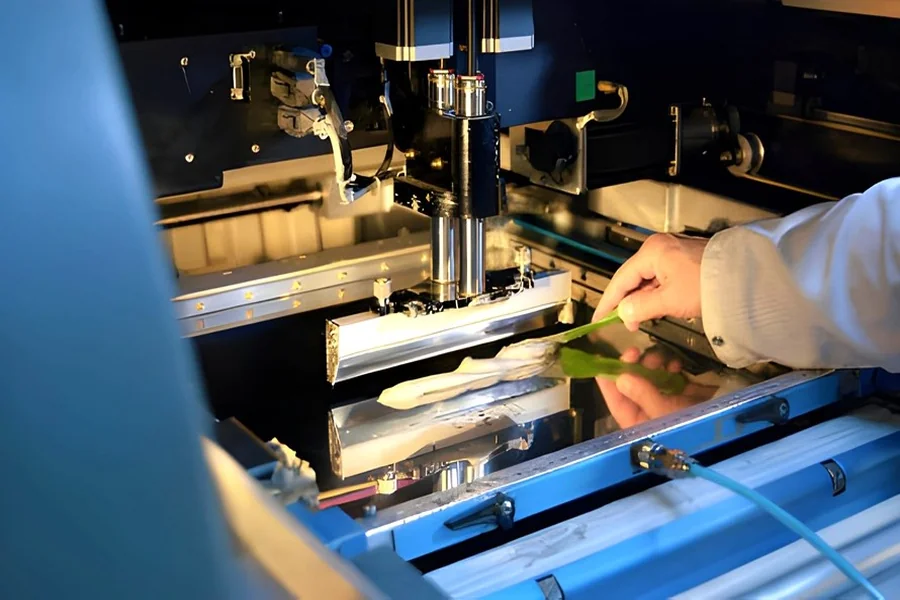
Solder paste is applied to SMT pads using a stencil printer. The accuracy of this step is crucial for proper component placement and solder joint quality.
-
Component Placement
Automated pick-and-place machines accurately mount surface mount components. For THT parts, components are inserted manually or by robotic equipment depending on the complexity of the design.
-
Reflow and Wave Soldering
After SMT placement, the board passes through a reflow oven to solder surface mount parts. Once cooled, through-hole components are soldered using wave soldering or selective soldering, ensuring strong mechanical bonds without damaging SMT parts.
-
Inspection and Testing
Each assembled board undergoes multiple inspection stages, including Automated Optical Inspection (AOI), X-ray inspection, and functional testing. These steps confirm solder joint integrity and ensure the board performs as intended.
Challenges in Mixed Technology PCB Assembly
While mixed technology PCB assembly provides superior flexibility, it also presents unique challenges. Managing different soldering processes for SMT and THT requires precise timing and temperature control. Manufacturers must carefully sequence soldering steps to prevent thermal damage to previously mounted components.
Additionally, mixed assemblies often involve complex rework and testing procedures, requiring advanced inspection equipment and skilled technicians. To achieve consistent results, manufacturers must maintain tight process controls and invest in high-end assembly automation.
Quality Assurance in Mixed Technology PCB Assembly
Quality assurance plays a crucial role in the success of mixed technology PCB assembly. Manufacturers implement real-time monitoring systems and statistical process controls (SPC) to detect defects early in the production line. Adherence to international standards such as ISO 9001 and IPC-A-610 ensures each PCB meets strict quality and reliability benchmarks.
Furthermore, component traceability systems are used to track each part from procurement through production, enhancing accountability and maintaining high manufacturing standards.
The Future of Mixed Technology PCB Assembly
As electronic devices become increasingly compact and multifunctional, mixed technology PCB assembly will continue to gain importance. With advancements in automation, selective soldering, and 3D inspection systems, manufacturers can now achieve even greater precision and efficiency in hybrid PCB production.
AI-driven process optimization and machine learning quality checks are also transforming how PCBs are assembled, minimizing human error and improving production yield. The future of mixed technology assembly promises faster turnaround times, reduced costs, and superior reliability — essential for meeting the ever-growing demand for smart, high-performance electronics.
Conclusion
In today’s competitive electronics market, mixed technology PCB assembly stands out as the ideal solution for products that require both miniaturization and mechanical durability. It enables manufacturers to create compact, reliable, and high-functionality boards across industries ranging from medical to automotive.
For businesses seeking dependable and scalable assembly solutions, partnering with a trusted provider of printed circuit board assembly services ensures precision engineering, advanced manufacturing, and uncompromised quality — turning your complex designs into perfectly assembled products ready for global markets.
